sâmbătă, 22 martie 2014

Aurora Borealis - The Northern Lights

This is why I came here in the first place. A dream. My dream. Because I'm living my story and I'm happy doing this, despite the critics.


Bogdan arrived in Norway one day before me, on Wednesday morning, and he was lucky enough to catch the sun and the light in that sleepless day and night. He didn't sleep until I came, on Thursday morning, this is what I call LOVE. 
Love for photography. And for me.


I really don't know what to post first, The pictures he took during the day or the ones taken by night? I will reverse the time a little bit, and I'll post the night first, because it's so spectacular I can't stop myself. 


May I introduce… the Northern Lights, Aurora Borealis. It's a natural phenomenon, a natural light display in the sky, particularly in the high latitude regions, like this one where we are now. The aurora is caused by the collision of energetic charged particles with atoms in the high altitude atmosphere. The charged particles originate in the magnetosphere and solar wind and, on Earth, are directed by the Earth's magnetic field into the atmosphere.


Aurora Borealis is named after the Roman goddess of dawn, Aurora, and the Greek name for the North wind, Boreas. The aurora borealis most often occurs near the equinoxes, so this is why we are here exactly on my brother's birthday. 

HAPPY BIRTHDAY, BRO! 
I LOVE YOU, even if I'm not there to celebrate today!


Bogdan went two nights ago on Skanksanden beach, somewhere North from where we are now, and he was lucky enough to catch this beautiful aurora.


In this area, Lofoten Islands, you can see the aurora, if the night is clear, from late September until the beginning of May. 


We came with the astro-photographer Alex Conu, on an organised tour, he knows well the places and the light. Actually, he came here for good, together with his wife, Anca, so if you have in mind a visit in the area, you can contact him at www.doipeglob.ro, and I'm sure you'll get the best of those views, in any season.


There is a website where you can keep up with what is happening in the sky: www.spaceweather.com, you can find some aurora borealis prognosis and alerts.


Unfortunately, when we woke up, the weather was really bad, the sky was dark and it started to snow all of a sudden. Today we found a snowman in front of our cabin's door.


Hello, Olaf!


I hope I'll see it one of those nights, the weather changes every hour, so chances are good. If you're wondering about the points on the sky, that is not photographic noise, those are STARS!


Wish me luck!

vineri, 21 martie 2014

Short Break in Oslo

It was a very busy time of the year for me, the end of February and the beginning of March. I finnished it around a week ago, and I was day dreaming about the northern lights since. But, Saturday evening, Runa had an accident while she played with her brother, so we spent the evening in the hospital, and also last Monday and Tuesday, with a little surgery on her knee.

I missed the departure on Tuesday, but she was doing fine, so I decided to follow my husband the next day. Three planes, a ferry and 22 hours later I arrived in Lofoten Islands, Norway.

In Oslo I spent around 10 hours, so I went downtown to visit the city. There is a train a little bit expensive (170 Nok = 21 Euro for one way), but it takes only 20 minutes to arrive.

The light was dull and it was very cold, so please excuse the quality of my pictures. 


The view from the train was really interesting, pretty red houses in the snowy fields...


In the Central Station, the first shop I saw it was this gorgeous flower shop. I spent minutes staring at it, counting the well-assorted flowers.


The University of Oslo is quite impressive, isn't it?


Also the Royal Palace...


vineri, 21 februarie 2014

Don Quichote's Land

We started our journey today in Toledo, with a magnificent sunrise from our hotel's terrace (me) and a ride in the bushes to catch the light over the Tajo river (my husband, the Photographer).


Then, decisions, decisions. To go in Madrid and visit the Prado Museum or to follow the steps of Don Quixote and Sancho Panza in La Mancha? Dark or sunlight? Inside or outside? North or South? Oh, difficult choice! And the only possible answer was... come on, the windmills and the lagunas, of course!


First stop was kind of "Please, honey, exit the highway and take right! Now! Look at those beautiful clouds over the hill!" And so he did, so we visited Consuegra, a small village famous due to its windmills. They became famous in the 16th century, when Don Quixote was first published. The introduction of the windmills was made by "Caballeros Sanjuanistas", who brought these machines that helped millers by using the wind to grind grain.


Most Spanish windmills, like those described in Cervantes's Don Quixote, can be found in the province of Castilla-La Mancha in central Spain, like exactly where we are now. The best examples of restored Spanish windmills may be found in Consuegra where several mills spike the hill just outside of town, giving us a spectacular view of the 12th-century castle and of the town. The castle was once a stronghold when Consuegra was the seat and priory of the Knights of San Juan, the Spanish branch of the Knight's Hospitallers of the Order of St. John of Jerusalem. That's Wikipedia info.


Next stop: the scheduled one, Campo de Criptana. This is the site of Don Quixote's "terrifying and never-to-be imagined Adventure of the Windmills", in which the knight jousts with a whirling sail and is flung off his horse. There are 10 restored windmills, out of an original group of 32, the higest windmill concentration in the area.


After a gargantuesque lunch, we hurried up to the Parque National de las Lagunas de Rudeira, that's a chain of 15 lakes, on different levels, so the upper lakes flows in the lowest through some gorgeous waterfalls. Is one of the most amazing forms of the nature I ever saw.


Between the first lagoon, Blanca and that of Cenegal, there is a 120 metres drop, and the remaining lagoons form a chain and are connected via waterfalls, brooks, and underground currents. Las Lagunas de Ruidera are considered to be the source of the river Guadiana. They are supplied by the waters of underground aquifers and the river Pinilla. The main vegetation is made up of reeds, bulrushes, rushes, near the lagoons, and well as junipers and holm oaks. In their waters you can spot barbel, carp, pike, water snakes and tortoises.


We came back in Toledo late at night, catching the sunset on the highway. 


On the table we found strawberries and black chocolate, as well as a bottle of sparking wine, so please excuse me now (wink). I'll see you back tomorrow, now we're kind of busy... 

luni, 9 septembrie 2013

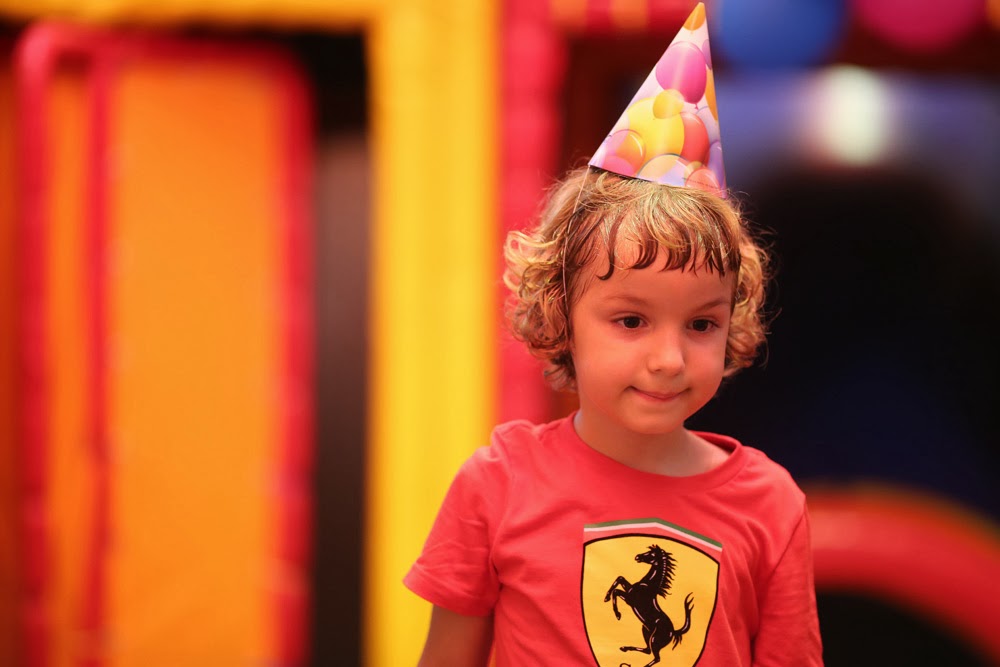
Radu's B-Day

I just stopped to say hello and to post some pics from Radu's Birthday. 

See you later!

Sorry for absence! I'm busy living!